
Enquiry
Mysoreland Solutions LLPIndian Handicrafts
Karnataka, made by hand.
Three crafts, each protected by a Geographical Indication: Channapatna wooden toys, Bidriware from Bidar and Mysore rosewood inlay, bought direct from the artisans who make them.
Indian handicrafts
Karnataka, made by hand.
Handmade Indian craft sells abroad on two things: that it is genuinely handmade, and that someone can tell you who made it. We buy direct from the artisans, with no trading layer in between, so the maker is paid properly and the buyer gets the real piece.
A craft tradition with a court behind it
Karnataka's crafts grew up next to courts, and three of them still support working artisans today.
At Bidar, the tradition is traced to the Bahmani court of Ahmad Shah Bahmani, who ruled from 1422 to 1436, and the oldest bidri pieces in museum collections date from the late sixteenth and seventeenth centuries. At Mysuru, inlay work was practised under the Wodeyars: a rosewood games box inlaid at the Mysore court between 1825 and 1850 sits in the Victoria and Albert Museum in London. At Channapatna, the lacquer craft is usually traced to the eighteenth century and to Tipu Sultan, who is credited with bringing Persian artisans to teach local craftsmen. Its better documented chapter is later: in 1904 and again in 1909 a craftsman remembered as Bavas Miyan travelled to Japan to study lacquer and toy making, came home and opened a training school, and the lathe reached the workshops through his family soon after.
All three crafts hold a Geographical Indication, each registered in January 2006 and held by the Karnataka State Handicrafts Development Corporation.
Where the buyers are. The United States takes the largest share of India's handicraft exports at about 39 per cent, ahead of the United Kingdom, the UAE and Germany.
What we offer
Channapatna wooden toys
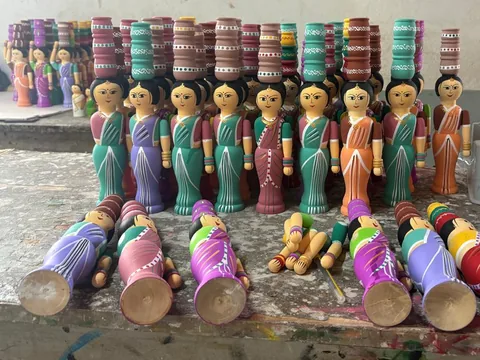
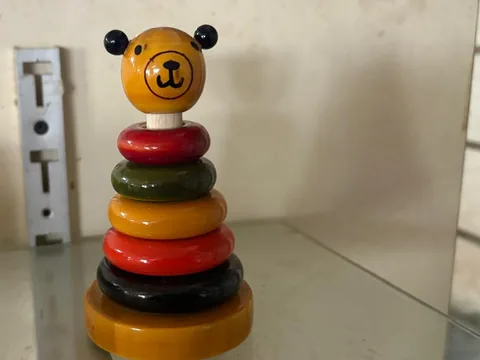
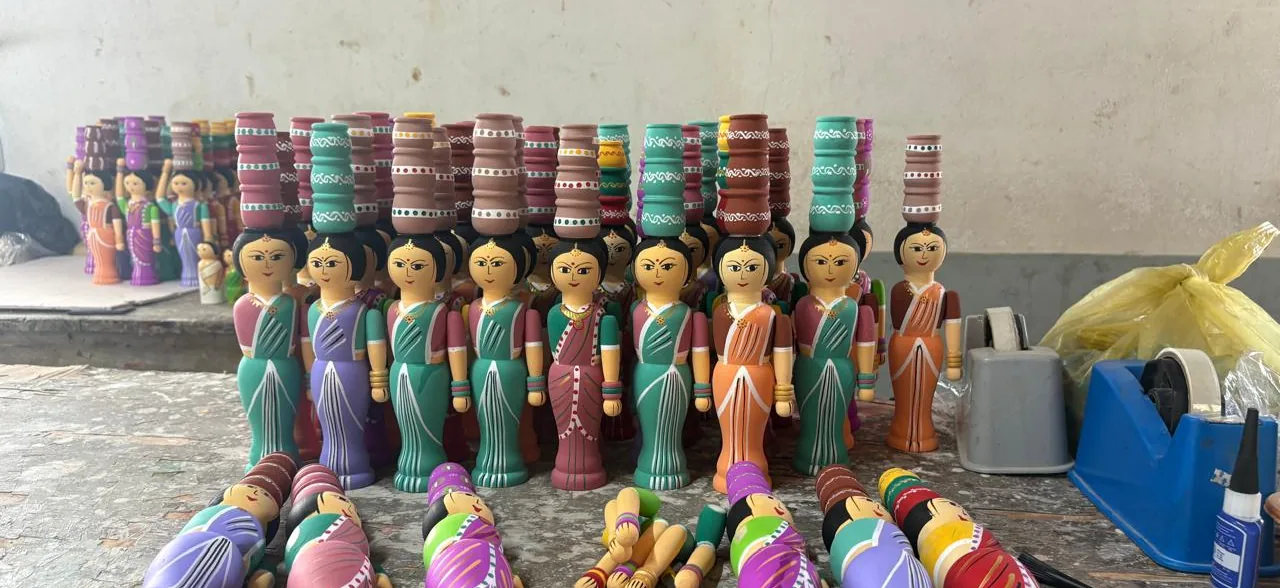
Channapatna sits on the Bengaluru to Mysuru road, in a town known locally as Gombegala Ooru, the town of toys. The work is done on a lathe: soft local hale wood is turned to shape, sticks of coloured lac are held against the spinning piece until the friction melts the colour onto the wood, and the surface is burnished with a dried palm leaf. The colours come from vegetal dyes. Each piece is finished by hand, so no two are identical.
A protected craft. Channapatna toys and dolls were granted a Geographical Indication by the Government of India in 2006, and the craft is a livelihood for over 1,500 artisans in the district.
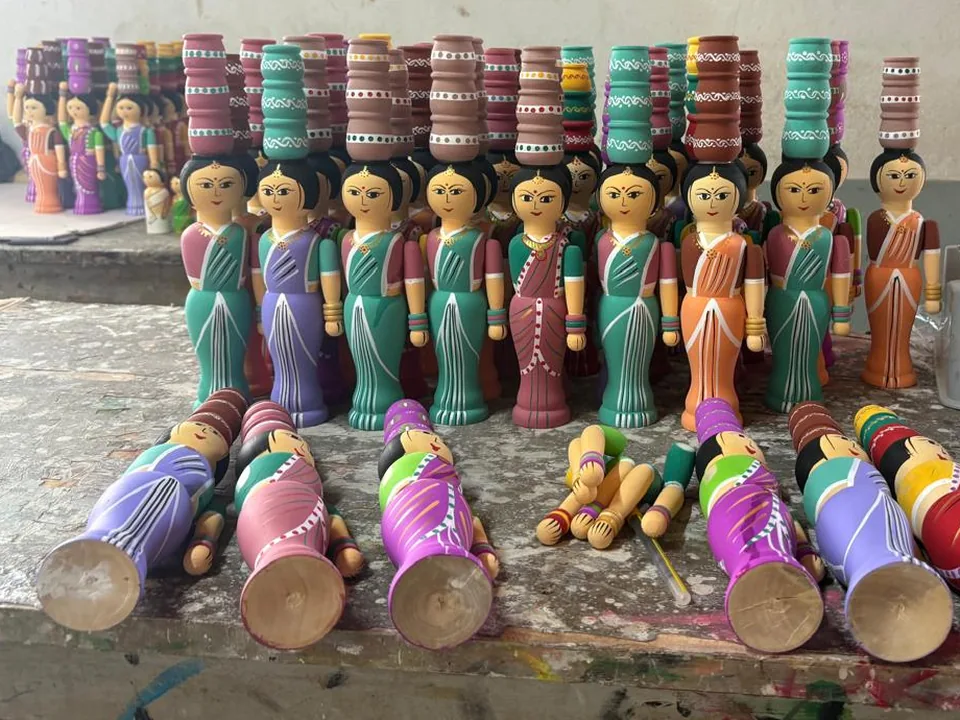
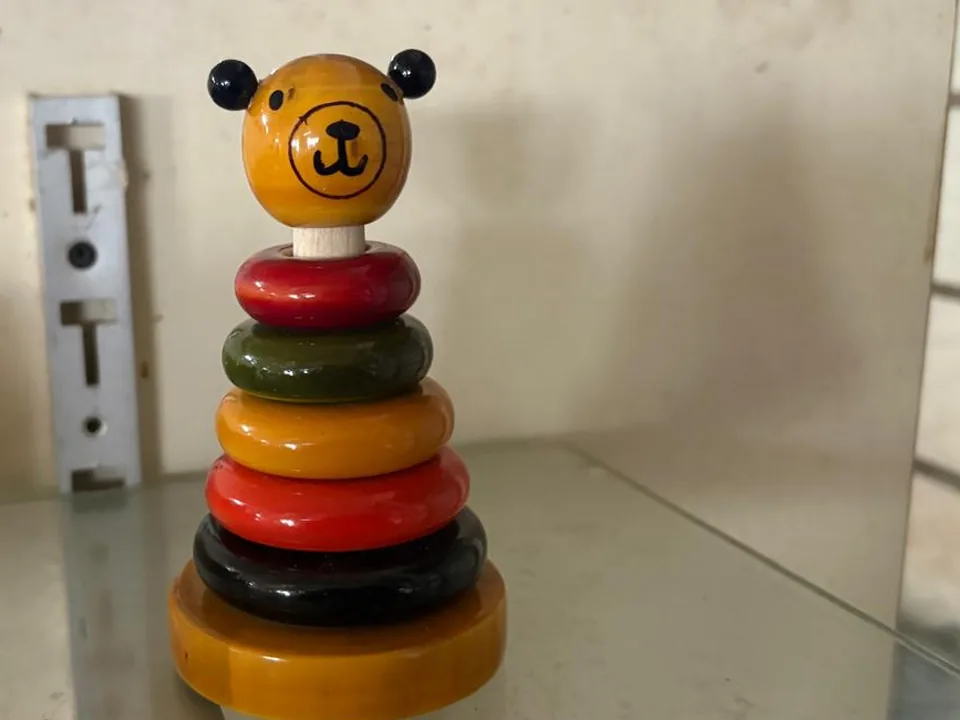
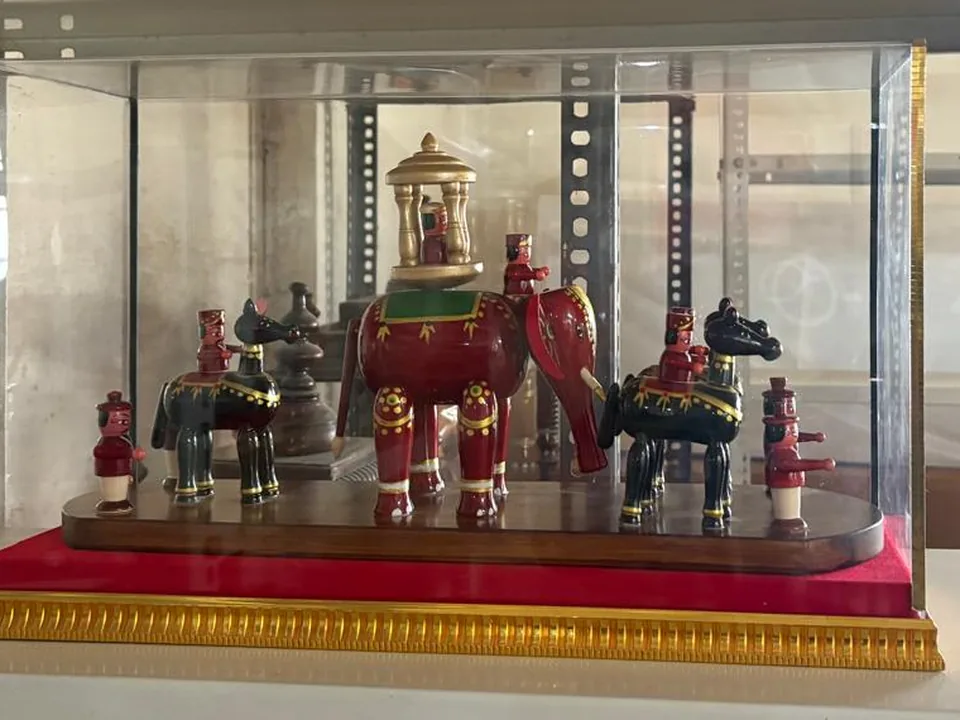
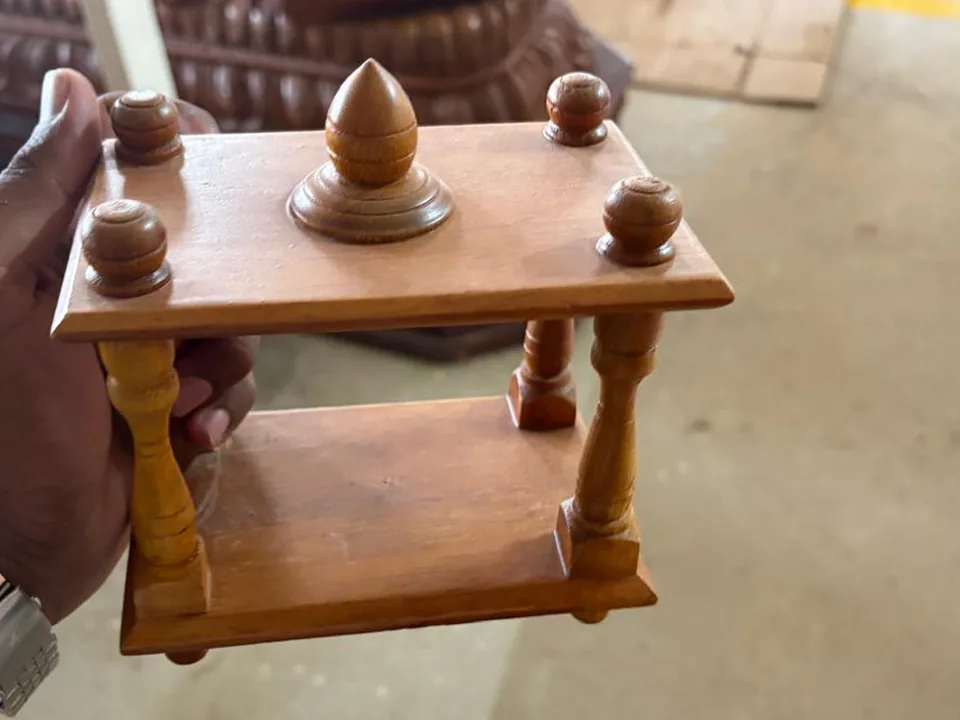
Channapatna pieces we ship
- Dolls and figures
- Stacking and counting toys
- Rattles and pull toys
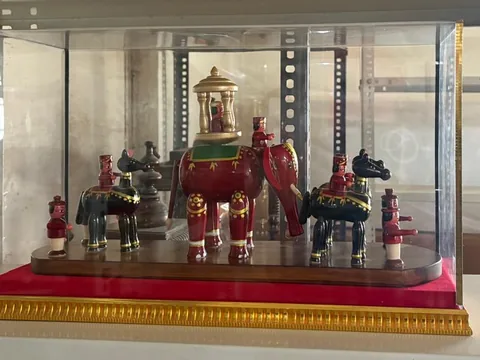
- Dasara procession sets
- Pooja mantaps and stands
- Painted elephants and decor
- Corporate and festival gifting
- Your design, made to order
Bidriware from Bidar
Bidriware is metal, not wood. The body is cast in an alloy in which zinc predominates, then filed and turned smooth. The design is chiselled into the surface and pure silver is hammered into the cut lines. The piece is then blackened, traditionally with a paste made from soil taken inside Bidar fort, and rubbed with vegetable oil. The silver stays bright against a deep matt black that does not tarnish.
Still not fully explained. Why the fort soil blackens the alloy so well has never been settled. The Victoria and Albert Museum puts it plainly: the exact chemical process that takes place is still unidentified.
Bidri pieces we ship
- Vases
- Boxes and caskets
- Pen and desk sets
- Photo frames
- Figurines
- Jewellery
- Corporate gifting
Bidri is decorative ware. We do not sell it as food-safe or drinking ware, because the historic alloy recipes include lead and tin and no test report exists for the craft as a whole.
Mysore rosewood inlay
Inlay work from Mysuru sets contrasting materials into a rosewood ground. The drawing is transferred at full size, each piece is cut to the line and set into the wood, then glued, pressed and sanded flush before polishing. Panels and pictures are the mainstay, alongside trays, boxes, pen stands, tables and animal figures.
No ivory, and papers in order. Ivory has been out of this craft for decades and is illegal to trade in India. Today's inlays use coloured wood veneers, horn, bone and acrylic. Rosewood itself is a CITES listed timber, so shipments travel with the certification that rule requires.
Inlay pieces we ship
- Wall panels and inlay pictures
- Trays and platters
- Boxes
- Pen stands
- Tables and nesting tables
- Animal figures
- Commissioned designs
Questions about our handicrafts
Crafts, makers and orders, answered plainly.
What handicrafts does Mysoreland Solutions export?
Three Karnataka crafts, each protected by a Geographical Indication: Channapatna wooden toys, Bidriware from Bidar, and Mysore rosewood inlay. Between them they cover toys and gifting, metal decor and collectables, and wooden panels and tableware.
What is a Channapatna toy?
A toy turned on a lathe from soft local hale wood in Channapatna, Karnataka, then coloured by pressing sticks of lac against the spinning piece until the friction melts the colour onto the wood. The surface is burnished with a dried palm leaf and the colours come from vegetal dyes. Every piece is finished by hand.
What is Bidriware?
A metal craft from Bidar in north Karnataka. The body is cast in an alloy in which zinc predominates, the design is chiselled into the surface, pure silver is hammered into the cut lines, and the piece is then blackened so the silver stands out against a deep matt black that does not tarnish.
What is Mysore rosewood inlay?
Inlay work from Mysuru in which contrasting materials are cut to a full-size drawing and set into a rosewood ground, then glued, pressed, sanded flush and polished. Wall panels and inlay pictures are the mainstay, alongside trays, boxes, pen stands, tables and animal figures.
Are these crafts really GI protected?
Yes. All three are on the Indian Geographical Indications register, each certificated in January 2006, and all three are held by the Karnataka State Handicrafts Development Corporation: Channapatna Toys and Dolls, Bidriware, and Mysore Rosewood Inlay.
Do you buy direct from the artisans?
Yes. We buy from the artisans who make the pieces, with no trading layer in between, so the maker is paid properly and the buyer gets the real thing rather than a copy made elsewhere.
Can you make custom or branded pieces?
Yes. Channapatna workshops take made-to-order designs, and inlay panels are routinely commissioned to a buyer's drawing. Send the design, the size and the quantity and we will come back on feasibility.
What toy safety rules apply when importing these to the EU or USA?
They are the importing country's rules, not India's. For the European Union, toys need CE marking against the EN 71 series under Directive 2009/48/EC; Regulation (EU) 2025/2509 replaces it and applies in full from 1 August 2030. For the United States, ASTM F963 and the CPSIA apply. Indian exemptions for GI-registered or artisan-made toys apply only inside India and carry no weight at your border. We will not claim a certification we do not hold: testing is arranged per product and per batch when a buyer needs it.
Is there anything special about importing rosewood?
Yes, and it is worth knowing before you order. Rosewood is Dalbergia, a genus listed in CITES Appendix II, so inlay pieces ship with the certification that listing requires. United States buyers should also expect a Lacey Act declaration, which needs the species name and country of harvest from us. European buyers should account for the EU Deforestation Regulation, which covers inlaid wood and applies from 30 December 2026 for larger operators. Bidriware and Channapatna toys are not affected by any of this.
How do I know a Channapatna toy is genuine?
Three checks. The craft holds a Geographical Indication, registered in January 2006 and held by the Karnataka State Handicrafts Development Corporation, so ask who the piece came from. Genuine work is lathe-turned and lacquered by hand, so no two pieces are identical and the colour sits in the wood rather than on it as a painted coat. And a real supplier can tell you which workshop made your order, because they bought it there.
How do I order samples?
Write to exports@mysorelandsolutions.in or message the exports desk on WhatsApp with the craft, the pieces you want and your destination country, and we will quote samples before any bulk order.
Contact
Request a quote.
Tell us the product, grade, quantity and destination. Our Agri Exports desk will get back to you.